


• Soluciones
    • Altos Costos de Combustible
    • Costos de Mantenimiento Inesperados
    • Operaciones optimizadas
    • Entregas exitosas sensibles a la temperatura
    • ELD & DVIR
    • Altos Costos de Seguro
    • Variedad de reportes automatizados
    • Problemas de Desempeño del Conductor
    • Reducción de accidentes con video sobre demanda y en tiempo real
    • Presión de neumáticos
    • Robo de Vehículos y Seguridad
  • Forge AI
  • Industrias
    • Construcción
    • Transporte y Carga
    • Gestión de residuos
    • HVAC, plomería y mantenimiento doméstico
    • Alimentos y Agricultura
    • Minería
    • Logística de Última Milla
    • Flota de Arrendamiento vehicular
  • Productos
    • Dashcams
    • Trackers
    • Sensores
    • Accesorios
    • Seguimiento de activos BLE
  • Precios
  • Recursos
    • Calculadora ROI
    • Blog
    • Aviso de Privacidad
    • Términos y Condiciones
  • Compañía
    • Sobre nosotros
    • Contáctenos
    • Vacantes
    • Ofertas de Trabajo
    • PR Releases
PosiTrace home
  • Soluciones

    Reduzca Costos Operativos

    Altos Costos de Combustible
    Costos de Mantenimiento Inesperados

    Mejore la Seguridad y el Cumplimiento

    Problemas de Seguridad y Cumplimiento
    Altos Costos de Seguro

    Proteja Sus Activos

    Problemas de Desempeño del Conductor
    Robo de Vehículos y Seguridad
    • Altos Costos de Combustible
    • Costos de Mantenimiento Inesperados
    • Operaciones optimizadas
    • Entregas exitosas sensibles a la temperatura
    • ELD & DVIR
    • Altos Costos de Seguro
    • Variedad de reportes automatizados
    • Problemas de Desempeño del Conductor
    • Reducción de accidentes con video sobre demanda y en tiempo real
    • Presión de neumáticos
    • Robo de Vehículos y Seguridad
  • Forge AI
  • Industrias

    Industrias

    Construcción
    Transporte y carga
    Gestión de residuos
    HVAC, plomería y mantenimiento doméstico
    Alimentos y agricultura
    Minería
    Logística
    Arrendamiento y financiamiento vehicular
    • Construcción
    • Transporte y Carga
    • Gestión de residuos
    • HVAC, plomería y mantenimiento doméstico
    • Alimentos y Agricultura
    • Minería
    • Logística de Última Milla
    • Flota de Arrendamiento vehicular
  • Productos
    Products
    Dashcams
    Trackers
    Sensors
    Accessories
    BLE Asset Tracking
    • Dashcams
    • Trackers
    • Sensores
    • Accesorios
    • Seguimiento de activos BLE
  • Precios
  • Recursos
    Resources
    ROI Calculator
    Blog
    Privacy Policy
    Terms of Service
    Webinars
    • Calculadora ROI
    • Blog
    • Aviso de Privacidad
    • Términos y Condiciones
  • Compañía
    Recursos
    Sobre Nosotros
    Contáctenos
    Socios
    Carrera
    Vacantes
    • Sobre nosotros
    • Contáctenos
    • Vacantes
    • Ofertas de Trabajo
    • PR Releases
Ingresar
  • ESP
    • ENG
Logo_Positrace_horizontal.svg
Isotype_Positrace.svg
  • Soluciones

    Reduzca Costos Operativos

    Altos Costos de Combustible
    Costos de Mantenimiento Inesperados

    Mejore la Seguridad y el Cumplimiento

    Problemas de Seguridad y Cumplimiento
    Altos Costos de Seguro

    Proteja Sus Activos

    Problemas de Desempeño del Conductor
    Robo de Vehículos y Seguridad
    • Altos Costos de Combustible
    • Costos de Mantenimiento Inesperados
    • Operaciones optimizadas
    • Entregas exitosas sensibles a la temperatura
    • ELD & DVIR
    • Altos Costos de Seguro
    • Variedad de reportes automatizados
    • Problemas de Desempeño del Conductor
    • Reducción de accidentes con video sobre demanda y en tiempo real
    • Presión de neumáticos
    • Robo de Vehículos y Seguridad
  • Forge AI
  • Industrias

    Industrias

    Construcción
    Transporte y carga
    Gestión de residuos
    HVAC, plomería y mantenimiento doméstico
    Alimentos y agricultura
    Minería
    Logística
    Arrendamiento y financiamiento vehicular
    • Construcción
    • Transporte y Carga
    • Gestión de residuos
    • HVAC, plomería y mantenimiento doméstico
    • Alimentos y Agricultura
    • Minería
    • Logística de Última Milla
    • Flota de Arrendamiento vehicular
  • Productos
    Products
    Dashcams
    Trackers
    Sensors
    Accessories
    BLE Asset Tracking
    • Dashcams
    • Trackers
    • Sensores
    • Accesorios
    • Seguimiento de activos BLE
  • Precios
  • Recursos
    Resources
    ROI Calculator
    Blog
    Privacy Policy
    Terms of Service
    Webinars
    • Calculadora ROI
    • Blog
    • Aviso de Privacidad
    • Términos y Condiciones
  • Compañía
    Recursos
    Sobre Nosotros
    Contáctenos
    Socios
    Carrera
    Vacantes
    • Sobre nosotros
    • Contáctenos
    • Vacantes
    • Ofertas de Trabajo
    • PR Releases
Ingresar
  • ESP
    • ENG
Optimización de beneficios

What is ABS? The Complete Guide to Anti-lock Braking Systems for Fleet Safety

Penelope Camargo
March 31, 2026

Understanding Anti-Lock Braking Systems (ABS) for fleet safety is the first step to preventing costly accidents and coaching drivers effectively. When your drivers slam on the brakes and feel that rapid pulsation through the pedal, that is their ABS activating. But here is what most fleet managers miss: every ABS activation is a data point that could prevent your next accident.

ABS is now standard on every commercial vehicle in North America. But having the technology is only half the equation. The other half is understanding when and why it activates, and using that information to 
coach drivers, fix dangerous routes, and reduce costs.

What is ABS and Why Should Fleet Managers Care?

An Anti-lock Braking System prevents wheels from locking during hard braking. This allows drivers to maintain steering control. When wheels lock, vehicles continue moving in whatever direction physics dictates, often into other vehicles, obstacles, or pedestrians.

According to the American Transportation Research Institute (ATRI), the average preventable commercial vehicle accident costs fleets between $50,000 and $500,000+ depending on severity, including vehicle damage, cargo loss, liability, and downtime. ABS helps prevent these crashes, but it only works when something goes wrong. Active safety means knowing what your drivers are doing before accidents happen.

How ABS Actually Works: The Technology Behind the Safety

Modern ABS consists of four main components working in milliseconds:

  • Wheel speed sensors track each wheel’s rotation up to 100 times per second
  • Hydraulic valves control brake pressure to individual wheels
  • Electronic Control Unit (ECU) processes sensor data and decides when to reduce pressure
  • Hydraulic pump restores pressure after the system releases it

When a driver brakes hard, sensors detect if a wheel is about to lock. The ECU reduces brake pressure to that wheel, then reapplies it, repeating this cycle 15 to 20 times per second. That rapid pulsation means the system is working.

The Proven Impact of ABS on Fleet Safety

ABS is one of the most studied safety technologies in commercial vehicles. Here is what the research shows:

Safety MetricFindingSource
Wet road fatal crashesReduced 24% with ABSNational Highway Traffic Safety Administration (NHTSA)
Wet road nonfatal crashesReduced 14% with ABSNational Highway Traffic Safety Administration (NHTSA)
Pedestrian and cyclist fatalitiesDown 27% with ABSNational Highway Traffic Safety Administration (NHTSA)
Heavy truck crashes (ABS-relevant)6% reductionNational Highway Traffic Safety Administration (NHTSA)
Large truck rear-end crashes (AEB)41% reduction in crash rateIntelligent Transportation Systems Joint Program Office
Large truck rear-end crashes (FCW)44% reduction in crash rateIntelligent Transportation Systems Joint Program Office
AEB in passenger vehiclesCuts rear-end crashes by 50%Partnership for Analytics Research in Traffic Safety
Pickup trucks with AEB43% lower rear-end crash rateInsurance Institute for Highway Safety (IIHS)

ABS was the first revolution in fleet braking safety. Today, ABS is the foundation that enables advanced systems like Automatic Emergency Braking (AEB) and Forward Collision Warning (FCW). For fleet managers, properly maintained ABS is step one. Pairing it with collision avoidance technology is step two.

How Telematics Turns ABS Data into Coaching Opportunities

ABS prevents wheel lock. But it cannot prevent accidents caused by distracted driving, following too closely, speeding in poor conditions, driver fatigue, and/or aggressive lane changes. PosiTrace addresses these gaps by combining GPS fleet tracking with driver behaviour data:

  1. Hard Braking Event Tracking
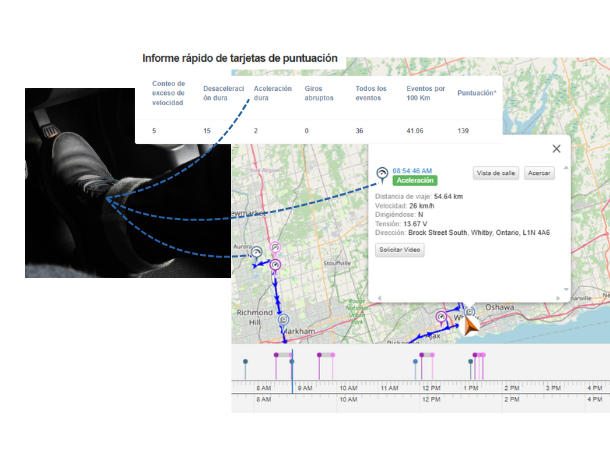
    When a driver triggers a hard braking event, fleet managers get alerts with GPS coordinates, timestamps, and g-force data. Review the event, see exactly what happened, and coach the driver accordingly.
  2. Driver Behaviour Scoring
    Driver scorecards make it simple to identify who needs coaching and track improvement over time. PosiTrace automatically scores drivers on:
    • Harsh deceleration frequency
    • Harsh acceleration
    • Cornering speed
    • Speeding violations
    • Idle time
  3. Preventive Maintenance Alerts
    Frequent hard braking events often point to:
    • Worn brake pads needing replacement
    • Damaged wheel speed sensors
    • Low brake fluid
    • Uneven tire wear
      PosiTrace’s preventive maintenance scheduling alerts you to service intervals before they cause breakdowns or accidents. The system automates maintenance reminders so nothing slips through the cracks.
  4. AI-Powered Video Evidence
    For fleets using PosiTrace’s AI dashcams, forward collision warnings and crash detection add another layer of protection. When incidents do occur, video evidence helps:
    • Establish what happened with hard data
    • Identify training opportunities
    • Support insurance claims

Success Story: Saskatoon’s Largest Paving & Construction Group

Fleet: 130 vehicles and equipment
Sector: Commercial, industrial, institutional, multi-residential, and property management

Challenges:

  • Theft of fuel, equipment, and vehicles valued at nearly $500,000 annually
  • Vehicle and equipment maintenance tracking with a manual system that often missed service intervals, causing costly breakdowns
  • Driver compliance violations the previous year

PosiTrace’s Solutions:

  • GPS and BLE tags for near real-time tracking of units, tools, and equipment
  • Automated maintenance reminders so service is never overlooked
  • Fuel fill and drain reports for better visibility into fuel card misuse
  • AI-powered dashcams to detect prohibited behaviour with voice alerts

Results:

  • 100% elimination of equipment theft
  • 15%+ monthly fuel savings
  • 5% reduction in annual maintenance costs
  • 100% reduction in fines related to cell phone use and smoking in commercial vehicles

Improve Fleet Safety with PosiTrace

ABS helps drivers maintain control during hard braking, but PosiTrace helps prevent those situations from happening in the first place. Our fleet management platform combines GPS tracking, driver behaviour monitoring, AI dash cameras, and maintenance alerts to help improve safety, reduce costs, and simplify fleet management. 

Schedule a free consultation to assess your current fleet safety strategy and discover how PosiTrace can help your operation.

Frequently Asked Questions

Does ABS reduce stopping distance in commercial vehicles?

Yes. NHTSA testing found ABS reduces stopping distance by 18 to 25% on dry pavement and 30 to 35% on wet surfaces for loaded commercial vehicles.

Can ABS fail? How would I know?

Yes, but rarely. The ABS warning light illuminates when the system detects a problem. Regular brakes still work, but you lose anti-lock protection. If the light comes on, schedule service promptly.

My drivers say ABS activates too often. Is that normal?

Frequent activation usually means one of three things: (1) drivers are following too closely, (2) routes have dangerous intersections, or (3) there is a maintenance issue. PosiTrace’s driver behaviour data tells you which.

Do all vehicles have ABS?

No, not all vehicles have ABS. It was initially introduced in the late 1970s, and it became standard on most vehicles by the early 2000s. However, some older or budget vehicles may not have ABS, while some high-end vehicles may have advanced ABS systems with additional features.

Contact Us


optimizaciónreportestarjetas de puntajestransporte

Related Articles


Optimización de beneficios
¿Cómo ahorrar dinero en costos de combustible con un sistema de monitoreo de combustible?
Información y análisis  ·  Optimización de beneficios
Gestion de Flota de Camiones
Business protection
Los 5 elementos clave de un programa eficaz de gestión de riesgos de flota
¿Qué es el ABS? Guía Completa para lograr la Seguridad de Flotas Mexicanas mediante datos de Frenado
Previous Article
Ahorro de diésel en flotas: cómo reducir el impacto del combustible más caro en México
Next Article